admin
admin 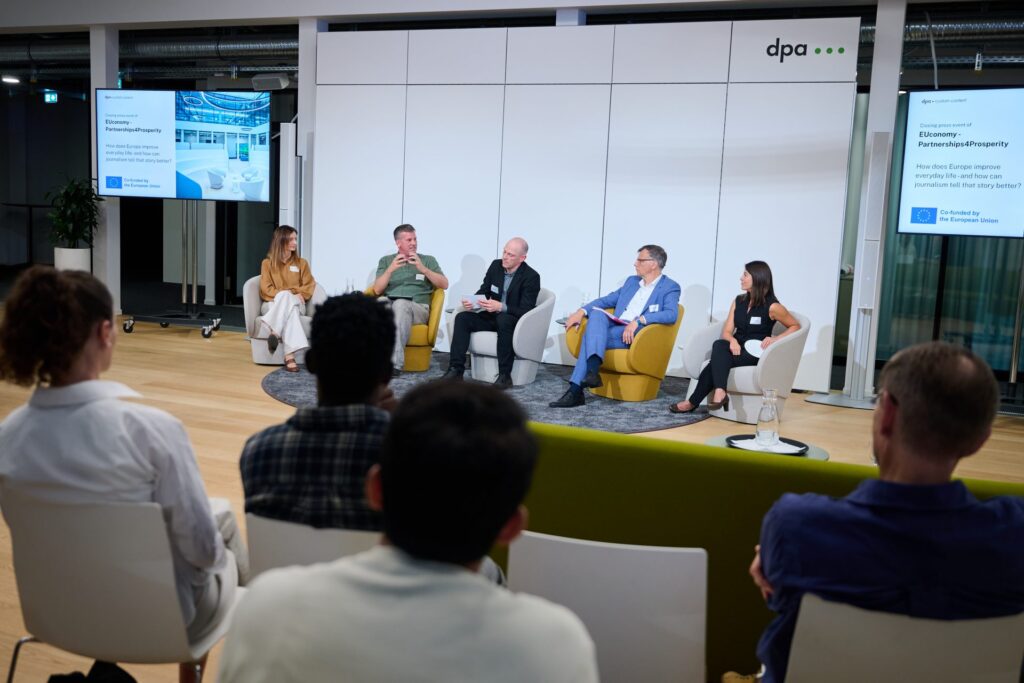
EU cohesion policy becomes tangible when people learn, work, access public services and cooperate across borders. This was one of the key messages of the closing event of EUconomy – Partnerships4Prosperity, a 12-month media initiative by dpa-Custom Content, co-funded by the European Union.
The event took place at the Berlin newsroom of Deutsche Presse-Agentur (dpa) and was streamed live via LinkedIn. Journalists, Interreg project coordinators, students, communication professionals and other stakeholders in European regional cooperation discussed how the impact of EU cohesion policy can be made more visible to regional audiences.
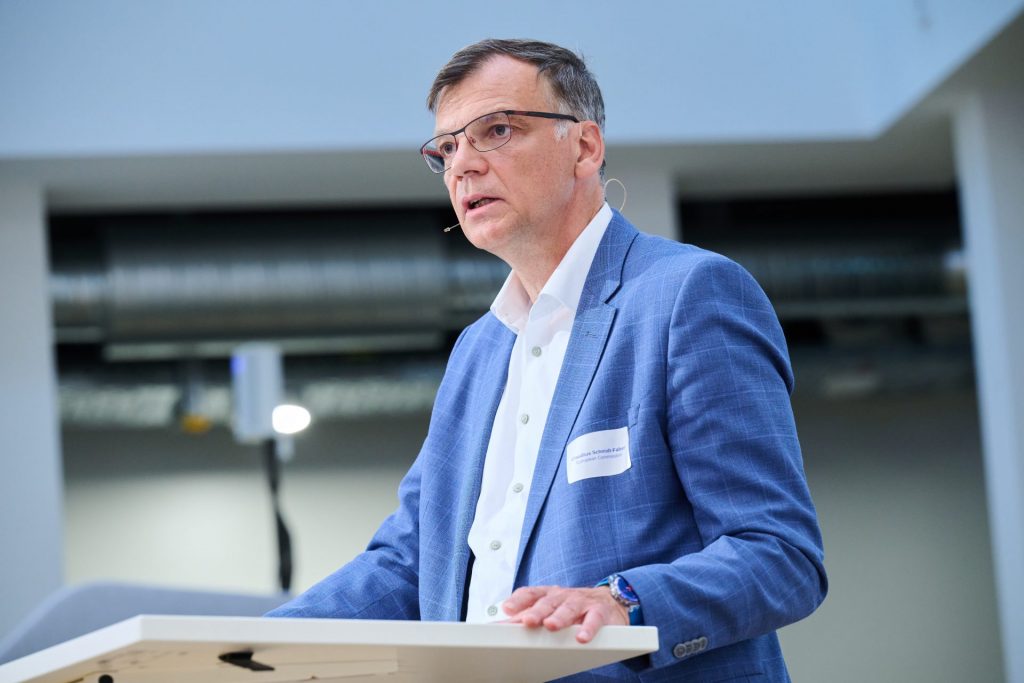
Claudius Schmidt-Faber, Senior Economic Expert at the European Commission in Germany, placed cohesion policy in the context of European integration and future regional development. Looking ahead to the EU’s next Multiannual Financial Framework from 2028, he also addressed the future architecture of cohesion policy.
“When we speak about cohesion policy, we are speaking about one of the most concrete promises of the EU: that integration should benefit all regions, territories and citizens,” Schmidt-Faber said. Europe cannot be resilient if entire regions are left behind, or united if borders remain barriers. “Cohesion is not a luxury. It is necessary.”
Interreg builds cooperation and trust
A central topic of the panel discussion was why the impact of cohesion policy is often difficult for citizens to see. Dr Kai Böhme, an expert in European regional policy and territorial development, as well as founder and director of Spatial Foresight, offered a simple explanation: “You don’t see things when they work well.” When cross-border transport, healthcare or education function smoothly, the cooperation behind them often remained invisible. The absence of obstacles could itself be a result of successful cohesion policy, Böhme added.
Izabela Glišić, Head of the Joint Secretariat of the Interreg VI A Brandenburg-Poland 2021-2027 Cooperation Programme, emphasised that Interreg was fundamentally about funding cooperation between regions and countries. A central focus was building trust, creating relationships that can continue beyond individual funding projects.
Interreg supports regions in addressing challenges in areas including innovation, mobility, healthcare, climate adaptation, emergency services and education. “Interreg is not only about funding projects. It is about building habits of cooperation,” said Schmidt-Faber. “It creates trust – and in today’s Europe, trust is a strategic asset.”
TRAIL: Cohesion policy in higher education
Pinar Hepperle, Coordinator of the Sustainable Business Development Master’s programme at Offenburg University, contributed the project perspective. The Interreg-funded TRAIL project connects universities in Offenburg, Strasbourg and Basel. Students gain international and practical experience and prepare for a sustainable, cross-border working environment.
TRAIL shows how EU cohesion policy can connect students, universities, companies and the regional labour market. Hepperle also highlighted a key communication challenge: projects need to be explained differently to different audiences – including students, companies interested in cooperation, the wider public and administrative stakeholders. Effective communication therefore requires different approaches and formats rather than one single message, she said.
The discussion underlined that reporting on EU-funded projects should go beyond funding figures and institutional language. The key questions are concrete: Who benefits? What has changed? Which regional challenge is being addressed? And why was cross-border cooperation necessary?


© Annette Riedl
About EUconomy
EUconomy – Partnerships4Prosperity is a 12-month media initiative by dpa-Custom Content, co-funded by the European Union. The project produces free multimedia content packages – including videos, images and social media material – documenting EU-funded cross-border projects in Germany’s border regions with Austria, Poland, the Czech Republic, France and Denmark. All content is made available free of charge to media outlets across Germany and beyond.
dpa is the lead agency coordinating the European Newsroom (enr), a network of European news agencies.
Press contact: euconomy-pressevent@dpa.com