admin
admin 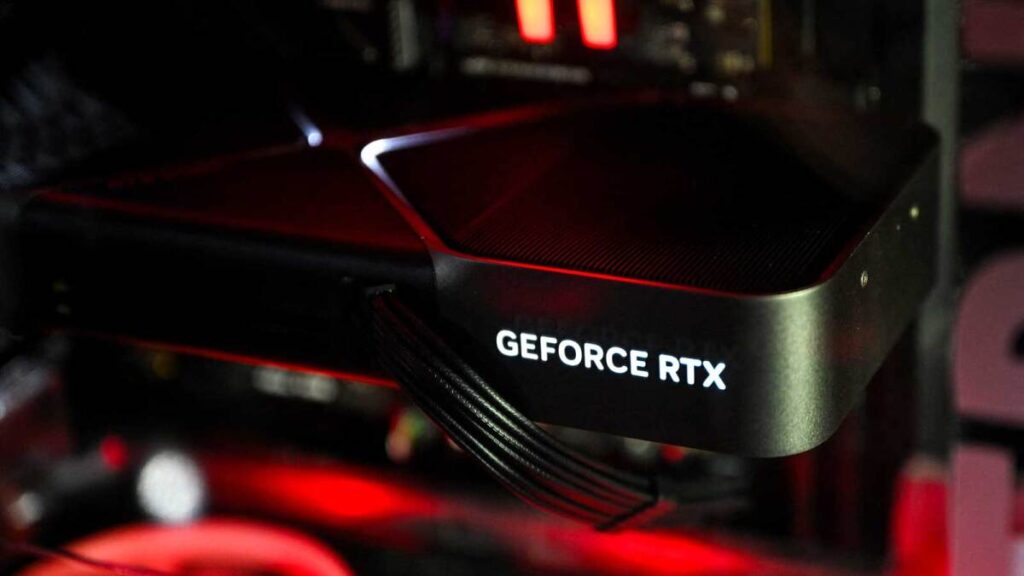
A PC modder has broken with convention and found that we should all mount our graphics cards at the front of the case, apparently. In some off-the-wall testing, YouTube modder TrashBench found that putting a graphics card at the front of a PC, right behind the main air intakes, can cut hotspot temperatures by up to 19 degrees.
Conventional wisdom in PC building is to use two or three intake fans and at least one exhaust fan, with strong cable management, to create a clear path for cool air to enter and hot air to exit. But aside from the few people who use riser cards to mount their GPU vertically to make it look cooler, most gamers just leave it in its standard PCIe slot.
It turns out that we’re missing out on a lot of cooling potential by handling it that way.
In his explainer video, TrashBench shows how he tried mounting the GPU on the case floor, right up against the intakes. That improved VRM temperatures and CPU temperatures impressively, but the GPU remained largely unaffected.
However, after moving the card right up against the front of the case, behind the air intakes, it dropped GPU core temperature by 17 degrees, hotspot by over 19 degrees, and VRAM by 14 degrees.
The only downside was it raised CPU temperatures by a degree. That might be worth the trade-off in your setup, but TrashBench tweaked it further and found that with the GPU at the front and the CPU radiator mounted in the roof of the case (but drawing air in), he could reduce GPU and CPU temperatures: GPU core down 10 degrees, CPU down 3.3.
It makes sense to rethink GPU positioning. Graphics cards have gone from pulling a handful of watts in the late 90s to more than the rest of the PC combined in 2026. With the GPU doing the heavy lifting in gaming, 3D design, and AI workloads, too, it makes sense to give it the lion’s share of the cool incoming air.
I’d like to see some new motherboard and case designs to make this realistic without running DisplayPort and HDMI extenders through the interior of your PC.